



Wireless for OPTA: Remote Micro PLC Monitoring Without the IT Bottleneck
How OPTA deployments gain centralized visibility across facilities, buildings, and distributed operations.
If you are already familiar with micro-PLC based control systems, you know the value of local automation is not the question. The bigger challenge starts after deployment: how do you maintain visibility across multiple systems, multiple sites, and multiple environments without turning connectivity into its own project?
That is especially relevant for teams working with Arduino Opta and Finder OPTA. These platforms make a lot of sense for modern control applications, but once deployments expand beyond a single cabinet or facility, remote monitoring, cloud routing, and fleet-wide visibility become much harder to solve cleanly.
That is where Wireless for OPTA comes in.
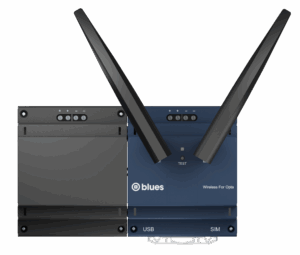
Wireless for OPTA adds cellular + Wi-Fi connectivity to Arduino Opta and Finder OPTA, giving teams a practical way to connect deployed systems, route operational data to the cloud, and monitor distributed assets without relying entirely on local network infrastructure. Instead of treating connectivity as a custom integration problem, teams can move toward remote diagnostics, predictive maintenance, and centralized fleet management with far less friction.
Why connectivity becomes the real challenge after deployment
For many control teams, the application logic is not the problem. The hardware is installed. The micro PLC is doing its job. The process is running.
The difficulty is everything around it.
As soon as OPTA-based systems are deployed across production lines, equipment rooms, facilities, or customer environments, visibility becomes harder to maintain. Wi-Fi may be unreliable. Ethernet may not be available where controls are installed. Even when network coverage exists, operational technology teams may still have to wait on internal IT processes, security approvals, firewall changes, or site-specific configuration before a remote monitoring project can move forward.
That slows down deployment and limits the value of the system after installation.
Instead of gaining a connected view across sites, teams often end up with a familiar set of compromises:
- equipment is deployed, but not fully visible
- remote troubleshooting is limited
- maintenance stays reactive
- technicians still rely on manual checks
- expanding from one site to many becomes more difficult than expected
For teams responsible for uptime, serviceability, and operational efficiency, connectivity can quickly become the main bottleneck.

What Wireless for OPTA adds to OPTA deployments
Wireless for OPTA is a click-in expansion module designed specifically for Arduino Opta and Finder OPTA. It adds cellular and Wi-Fi connectivity, making it easier to connect systems in environments where traditional local-network dependency slows projects down.
That matters because it changes what an Opta deployment can support after installation.
With Wireless for OPTA, teams can:
- connect systems without depending entirely on local Ethernet or Wi-Fi
- maintain more reliable connectivity with automatic failover between Wi-Fi and cellular
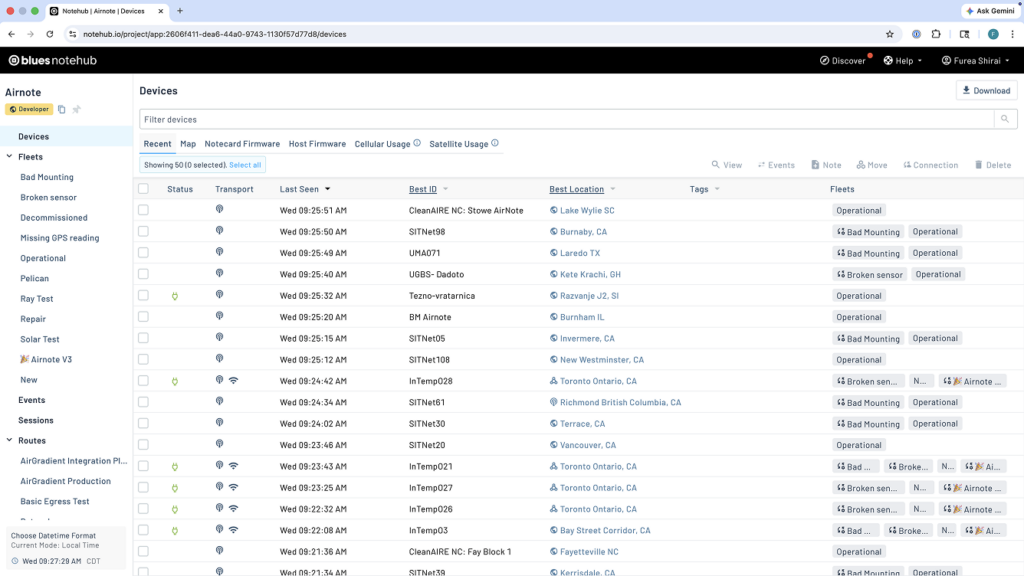
- easily route data to cloud platforms using our cloud software, Notehub
- manage deployed devices remotely
- support over-the-air updates
- improve visibility across distributed systems
- respond faster to outages, disruptions, and abnormal behavior
Instead of each deployment remaining an isolated control point, Wireless for OPTA helps turn OPTA-based systems into connected operational assets that are easier to monitor and manage at scale.
Another important advantage is outage awareness. Wireless for OPTA includes an onboard backup power supply, allowing it to detect power loss and send outage alerts even when the primary system goes down. For operations where downtime matters, that kind of visibility can shorten response time and reduce the impact of unplanned interruptions.

A better fit for real-world OT environments
One of the more persistent problems in industrial and facilities environments is that network access is often treated as a prerequisite instead of a constraint.
But in many real deployments, connectivity is the constraint.
Factory floors, utility spaces, rooftops, equipment enclosures, and remote rooms are not ideal network environments. Concrete walls, metal cabinets, electrical interference, and distance can all affect wireless reliability. In many facilities, even stable Wi-Fi does not solve the issue because operational technology teams may not have direct access to use it for new monitoring deployments.
Wireless for OPTA helps address that gap by giving teams a more flexible path to connectivity. Rather than delaying rollout until every site-specific network requirement is resolved, teams can deploy faster and maintain a cleaner path from control system to cloud.
That makes a difference in environments where speed, uptime, and repeatability matter more than building a custom networking workflow for every installation.
Fleet visibility for distributed OPTA deployments
Fleet management does not always mean vehicles. In many operations, the fleet is a distributed population of control systems deployed across sites, lines, buildings, rooms, or customer environments.
For OPTA deployments, that might mean:
- small machines across a manufacturing floor
- building systems spread across multiple properties
- distributed controls supporting warehousing or logistics infrastructure
- remote monitoring points installed across operational environments
In all of these cases, the need is similar: a centralized way to see what is happening, identify which systems need attention, and respond without treating every issue like an onsite event.
Wireless for OPTA supports that shift. When deployed OPTAs can be monitored through a connected workflow, teams gain a clearer view of system state across the environment. They can investigate remotely, reduce unnecessary truck rolls or site visits, and support a broader maintenance strategy built on visibility instead of guesswork.

A strong fit for commercial buildings and facilities
Commercial buildings and facilities are a natural fit for this model because many important control systems live in places where traditional connectivity can be inconvenient, inconsistent, or difficult to provision.
Mechanical rooms, rooftops, utility spaces, locked cabinets, and equipment enclosures are common locations for systems that still need reliable monitoring and timely response. That may include lighting controls, alarms, pumps, water systems, HVAC-related monitoring, and threshold-based automation.
For teams using OPTA in these environments, Wireless for OPTA creates a more practical path to connected monitoring. It allows solution builders and facilities teams to maintain visibility without making local network access the center of the project.
That means fewer blind spots, less time spent confirming status manually, and a simpler approach to long-term manageability across distributed building systems.
Industrial operations and distributed logistics infrastructure
The same model applies across industrial buildings, distributed facilities, and logistics infrastructure that supports warehousing, handling, storage, and throughput.
Not every operational challenge in transportation and logistics happens on the road. Many happen in the fixed environments that support movement and flow across the larger system. Warehouses, depots, loading areas, yard systems, and support facilities all rely on equipment and control systems that need to stay visible and responsive.
In these environments, Wireless for OPTA can help teams monitor micro-PLC-driven systems without depending solely on fragile local connectivity or slow coordination with onsite IT. That is especially valuable when operational assets are distributed, service access is limited, and even small disruptions can create downstream delays.
The goal is straightforward: keep systems visible, keep data moving, and reduce the operational cost of managing distributed equipment across sites.
What this looks like in practice
One example comes from Output Industries, which used Wireless for OPTA as the connectivity foundation for its Busroot manufacturing performance platform.
According to the case study, Wireless for OPTA helped Output Industries bypass plant network barriers, accelerate deployment, and deliver faster access to downtime, energy, and production data. That is a meaningful advantage in manufacturing environments where delayed connectivity often delays the value of the entire system.
The case study also notes that customers typically saw 20–25% productivity improvements, reinforcing the idea that faster deployment and better operational insight can translate into measurable impact. More importantly, it shows what happens when connectivity is no longer the part of the project that slows everything else down.
When systems are easier to connect and easier to manage, remote monitoring stops being a future initiative and becomes part of day-to-day operations.
Cloud-connected OPTA deployments without the usual delays
For teams already working with PLC-based systems, the challenge is not understanding the value of control. It is extending that value beyond the local environment.
That means making deployed systems easier to monitor, easier to update, easier to troubleshoot, and easier to manage across a growing footprint.
Wireless for OPTA helps make that possible.
By adding secure, rapidly deployable cellular + Wi-Fi connectivity to Arduino Opta and Finder OPTA, it gives teams a practical way to move from local automation to cloud-connected visibility, centralized fleet awareness, and faster action when something goes wrong.
Because remote monitoring for OPTA deployments should not begin with an IT bottleneck.


